Anxiety and Overthinking Therapy Bundle
A toolbox, not a workbook. Every resource in this bundle stands on its own. Pick the one tool that fits your client today, use it in session or send it home, and move on. Nothing has to be done in order, and nothing builds on a previous page.
The tools draw on cognitive behavioral therapy (CBT), acceptance and commitment therapy (ACT), exposure, and body-based regulation, and they are written for five life stages, because a 7-year-old, a 16-year-old, a 23-year-old, a 45-year-old, and a 70-year-old do not worry about the same things or learn the same way.
WHAT IS INSIDE
Kids 5 to 11 (24 resources)
Made for play, not paperwork. Coloring pages, an original read-aloud story (Juni and the Worry Bug), a Worry Eater box craft, a paper-bag puppet, a board game, coping bingo, a calm-down spinner, breathing and animal movement cards, a feelings thermometer, a sticker chart, bravery awards, Brave Bug Cards, and a caregiver handout on helping without rescuing.
Teens 12 to 17 (22 tools)
School and test stress, social media, friendships and group chats, perfectionism, night worry, belonging and identity, a calm playlist and lock screen activity, and a teen and caregiver conversation guide.
Emerging Adults 18 to 25 (22 tools)
Decision paralysis, launching pressure, money worry, impostor feelings, comparison and scrolling, family expectations across cultures, sleep, and a significant other (SO) conversation guide.
Adults 26 to 59 (22 tools)
Work and caregiving overload, mental load, health worry, the 3 a.m. worry plan, boundary scripts, anxious parenting, family accommodation, and a couples tool with a page for each partner and a shared plan.
Later Adulthood 60 and up (22 large-print tools)
Health and memory worries balanced with real medical care, loss and change, retirement and identity, staying connected, talking with adult children, caring for an SO, and a legacy letter.
Core tools in every teen and adult set
Worry loop map, the anxiety alarm, context check, thinking traps, thought check, worry time, worry sort, unhooking practice, making room, values compass, fear ladder and exposure log, panic plan wallet card, grounding and breathing menu, and the Unhook Cards deck (40 cards).
Clinician Kit
A tool finder that matches what your client brings in to the right tool, adaptable scripts for each skill, cultural and trauma-informed guidance with a "when to adapt or pause" table, the GAD-7 with scoring, documentation language for your notes, and APA references.
HOW THE TOOLS WORK
One topic per tool. Each tool focuses on a single skill or idea and runs one to four pages, with real room to write.
Worked examples. Most worksheets show a filled-in example before the client's own version.
Practice trackers. Tools meant to be practiced across a week end with a 7-day tracker you can print as many times as you need.
WOVEN INTO EVERY PAGE
Trauma-informed. Choice and pacing are built in, survival strategies are honored as skill, and no tool forces exposure.
Multicultural and intersectional. Context comes before pathology. Real threats such as discrimination, financial strain, and unsafe situations are named as real, not treated as distortions.
Inclusive. Diverse names, every family shape, collectivist and individualist values, and protective SO language throughout.
FILE DETAILS
Instant digital download (ZIP)
Kids resources: print-ready PDF
Teens through later adulthood: editable Word files and print-ready PDFs
Clinician Kit and Start Here guide: Word and PDF
US letter size (8.5 x 11 in)
Print crafts, games, and cards at 100 percent, ideally on cardstock
LICENSE
Licensed for one clinician. Print unlimited copies for your own clients, in person or by telehealth. Please do not resell, share, or post the files, or use them in products for sale. Group practice licenses are available on request.
These are clinical tools that support, and do not replace, professional judgment, diagnosis, or treatment. If a client is in immediate danger, call or text 988 in the United States or go to the nearest emergency department.
Created by a trauma-informed clinician. Seen and Known: Healing on a Continuum.
Anxiety and Overthinking Therapy Bundle
A toolbox, not a workbook. Every resource in this bundle stands on its own. Pick the one tool that fits your client today, use it in session or send it home, and move on. Nothing has to be done in order, and nothing builds on a previous page.
The tools draw on cognitive behavioral therapy (CBT), acceptance and commitment therapy (ACT), exposure, and body-based regulation, and they are written for five life stages, because a 7-year-old, a 16-year-old, a 23-year-old, a 45-year-old, and a 70-year-old do not worry about the same things or learn the same way.
WHAT IS INSIDE
Kids 5 to 11 (24 resources)
Made for play, not paperwork. Coloring pages, an original read-aloud story (Juni and the Worry Bug), a Worry Eater box craft, a paper-bag puppet, a board game, coping bingo, a calm-down spinner, breathing and animal movement cards, a feelings thermometer, a sticker chart, bravery awards, Brave Bug Cards, and a caregiver handout on helping without rescuing.
Teens 12 to 17 (22 tools)
School and test stress, social media, friendships and group chats, perfectionism, night worry, belonging and identity, a calm playlist and lock screen activity, and a teen and caregiver conversation guide.
Emerging Adults 18 to 25 (22 tools)
Decision paralysis, launching pressure, money worry, impostor feelings, comparison and scrolling, family expectations across cultures, sleep, and a significant other (SO) conversation guide.
Adults 26 to 59 (22 tools)
Work and caregiving overload, mental load, health worry, the 3 a.m. worry plan, boundary scripts, anxious parenting, family accommodation, and a couples tool with a page for each partner and a shared plan.
Later Adulthood 60 and up (22 large-print tools)
Health and memory worries balanced with real medical care, loss and change, retirement and identity, staying connected, talking with adult children, caring for an SO, and a legacy letter.
Core tools in every teen and adult set
Worry loop map, the anxiety alarm, context check, thinking traps, thought check, worry time, worry sort, unhooking practice, making room, values compass, fear ladder and exposure log, panic plan wallet card, grounding and breathing menu, and the Unhook Cards deck (40 cards).
Clinician Kit
A tool finder that matches what your client brings in to the right tool, adaptable scripts for each skill, cultural and trauma-informed guidance with a "when to adapt or pause" table, the GAD-7 with scoring, documentation language for your notes, and APA references.
HOW THE TOOLS WORK
One topic per tool. Each tool focuses on a single skill or idea and runs one to four pages, with real room to write.
Worked examples. Most worksheets show a filled-in example before the client's own version.
Practice trackers. Tools meant to be practiced across a week end with a 7-day tracker you can print as many times as you need.
WOVEN INTO EVERY PAGE
Trauma-informed. Choice and pacing are built in, survival strategies are honored as skill, and no tool forces exposure.
Multicultural and intersectional. Context comes before pathology. Real threats such as discrimination, financial strain, and unsafe situations are named as real, not treated as distortions.
Inclusive. Diverse names, every family shape, collectivist and individualist values, and protective SO language throughout.
FILE DETAILS
Instant digital download (ZIP)
Kids resources: print-ready PDF
Teens through later adulthood: editable Word files and print-ready PDFs
Clinician Kit and Start Here guide: Word and PDF
US letter size (8.5 x 11 in)
Print crafts, games, and cards at 100 percent, ideally on cardstock
LICENSE
Licensed for one clinician. Print unlimited copies for your own clients, in person or by telehealth. Please do not resell, share, or post the files, or use them in products for sale. Group practice licenses are available on request.
These are clinical tools that support, and do not replace, professional judgment, diagnosis, or treatment. If a client is in immediate danger, call or text 988 in the United States or go to the nearest emergency department.
Created by a trauma-informed clinician. Seen and Known: Healing on a Continuum.

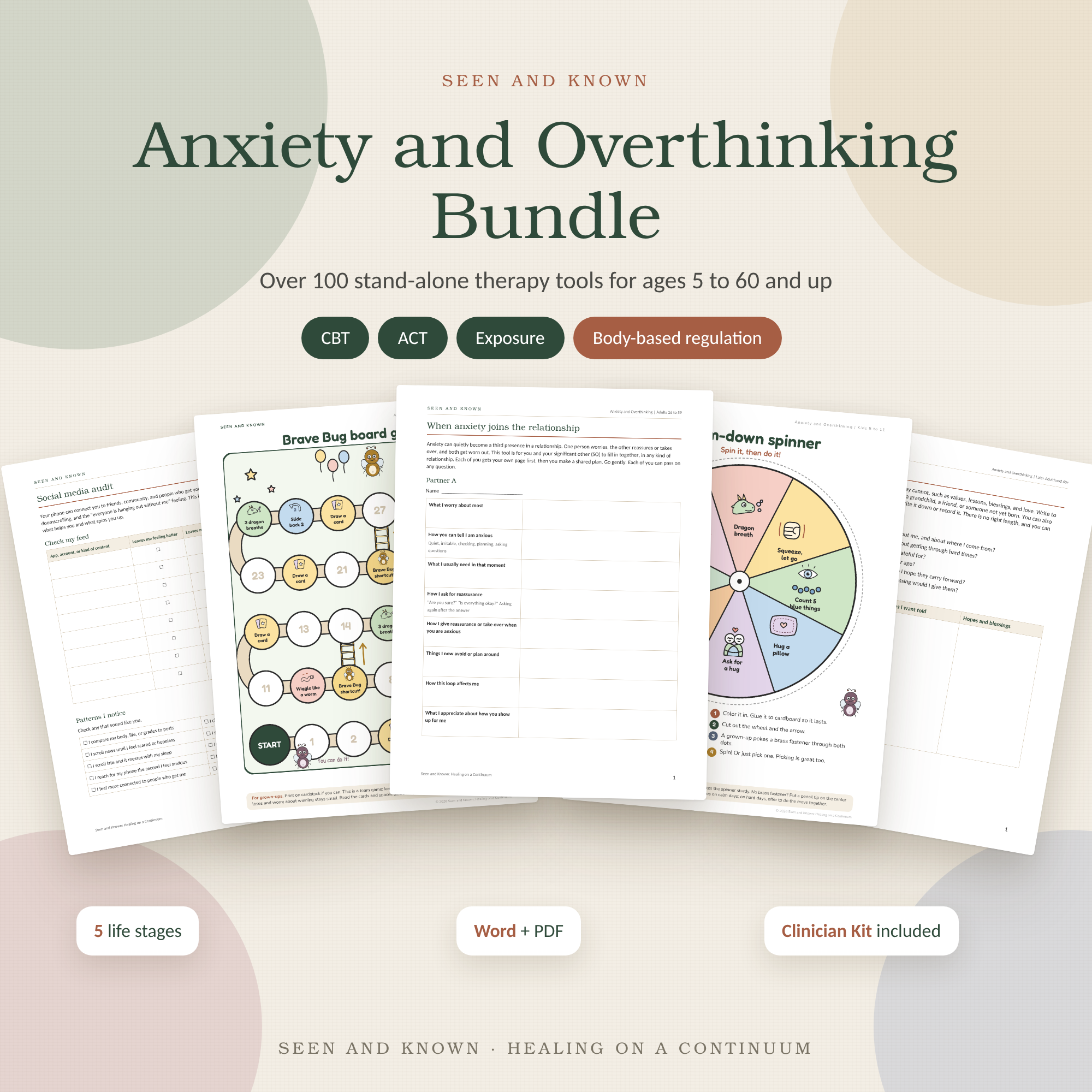 Image 1 of 9
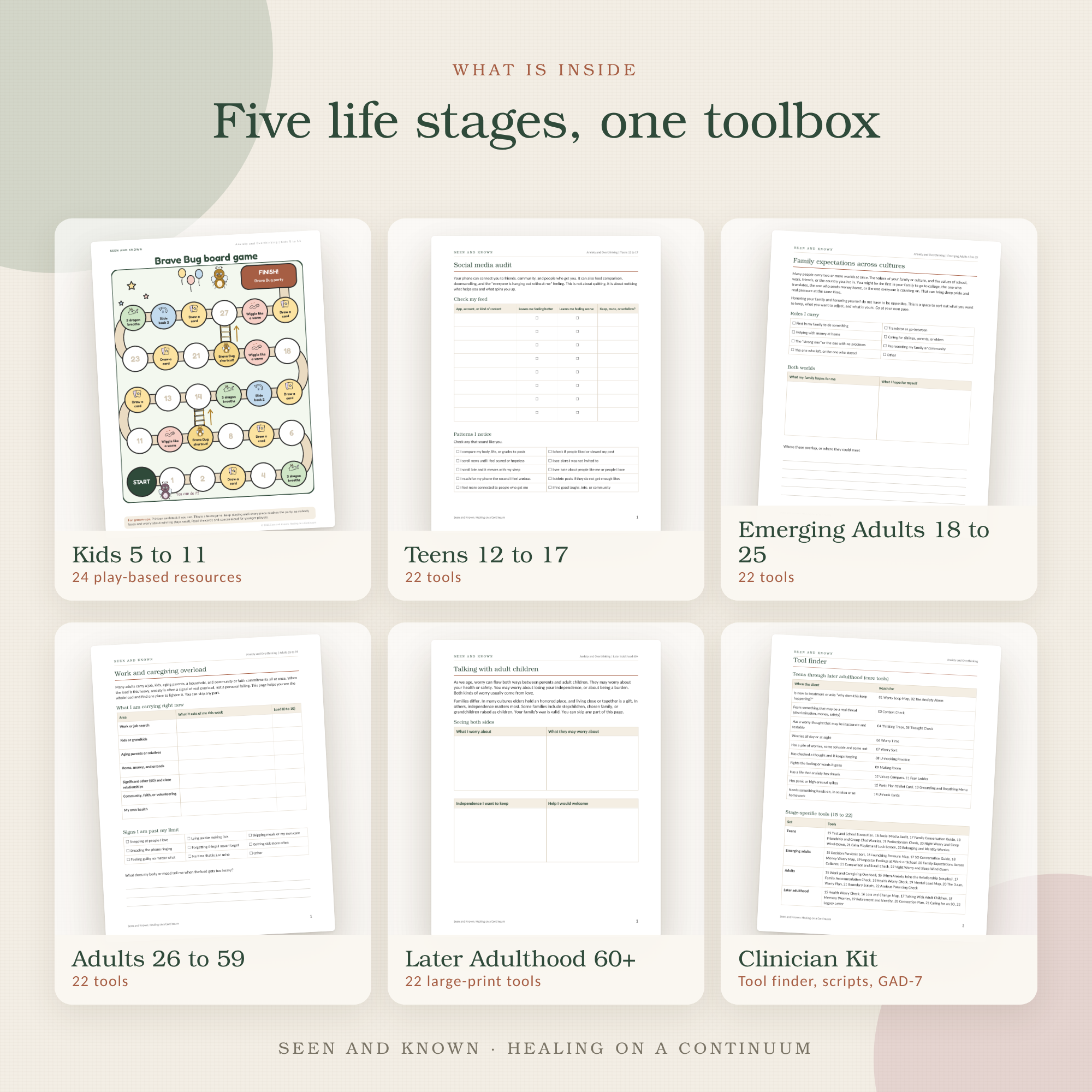 Image 2 of 9
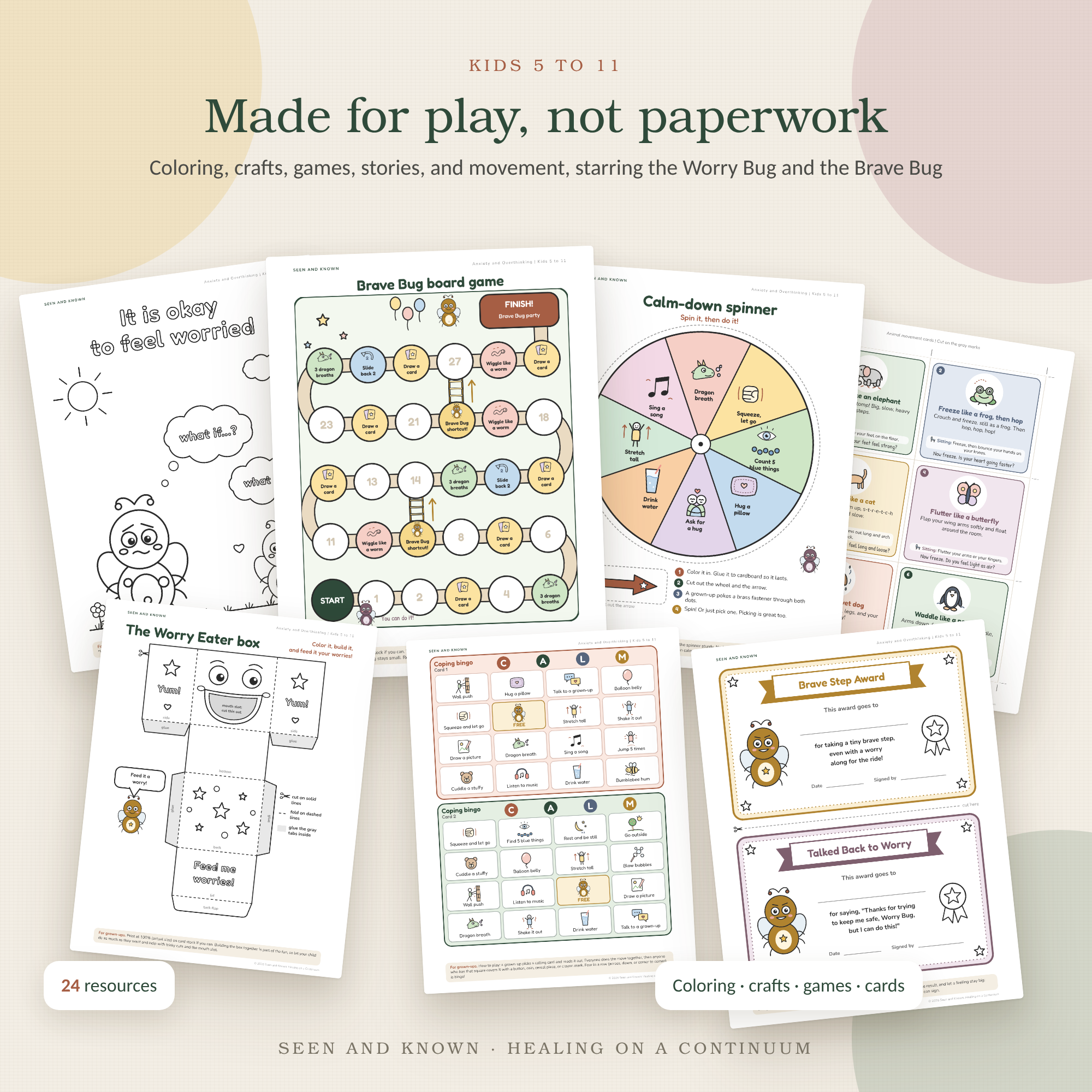 Image 3 of 9
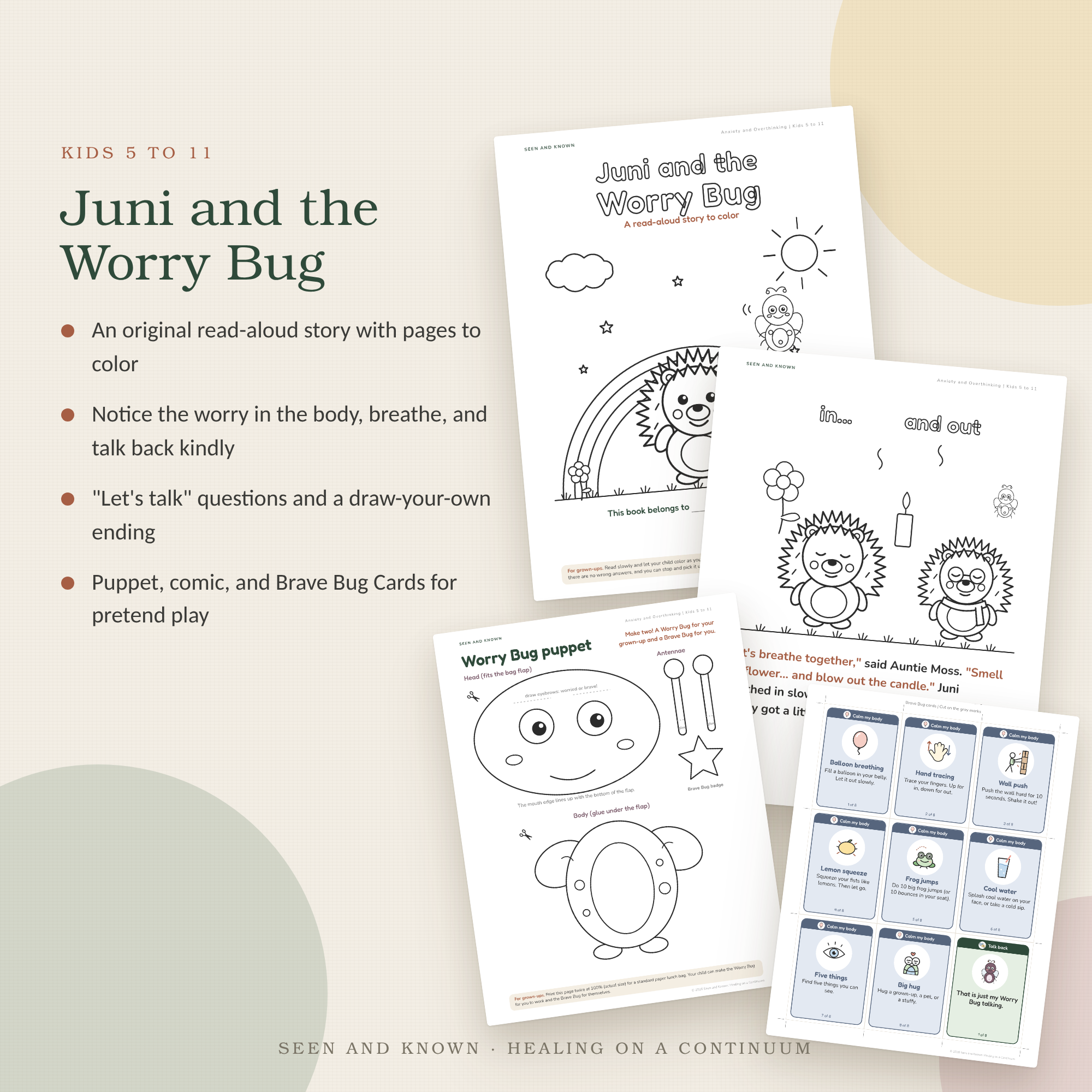 Image 4 of 9
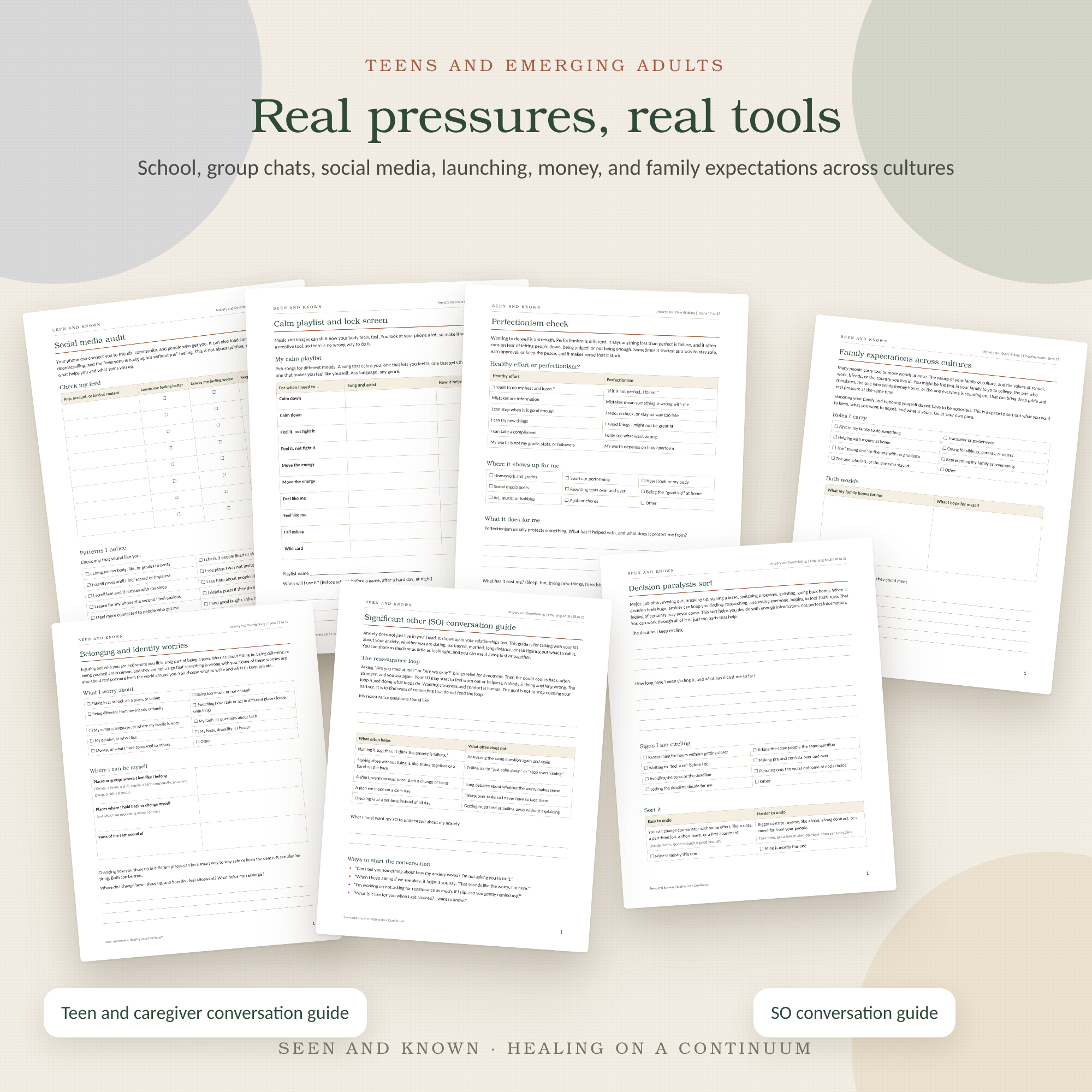 Image 5 of 9
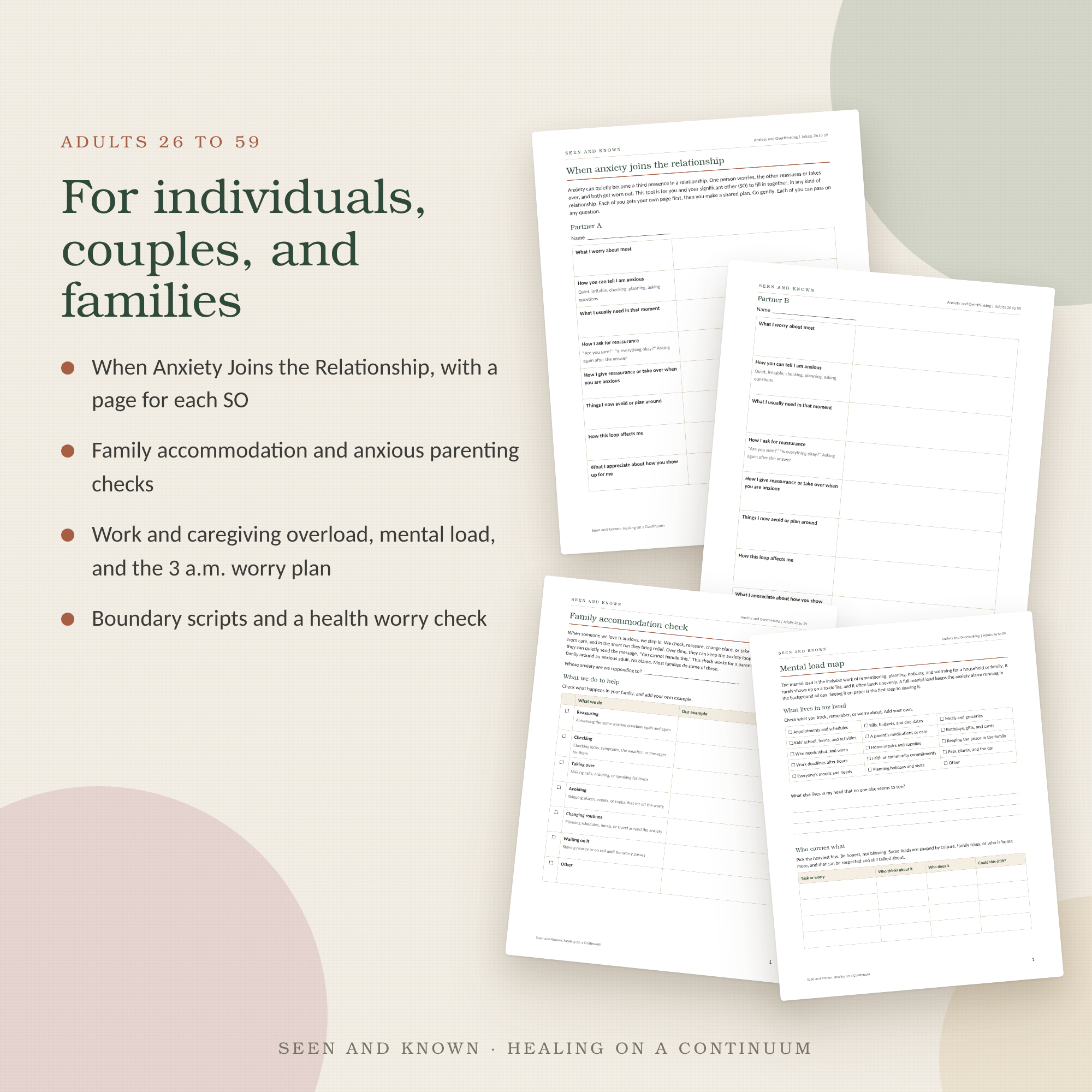 Image 6 of 9
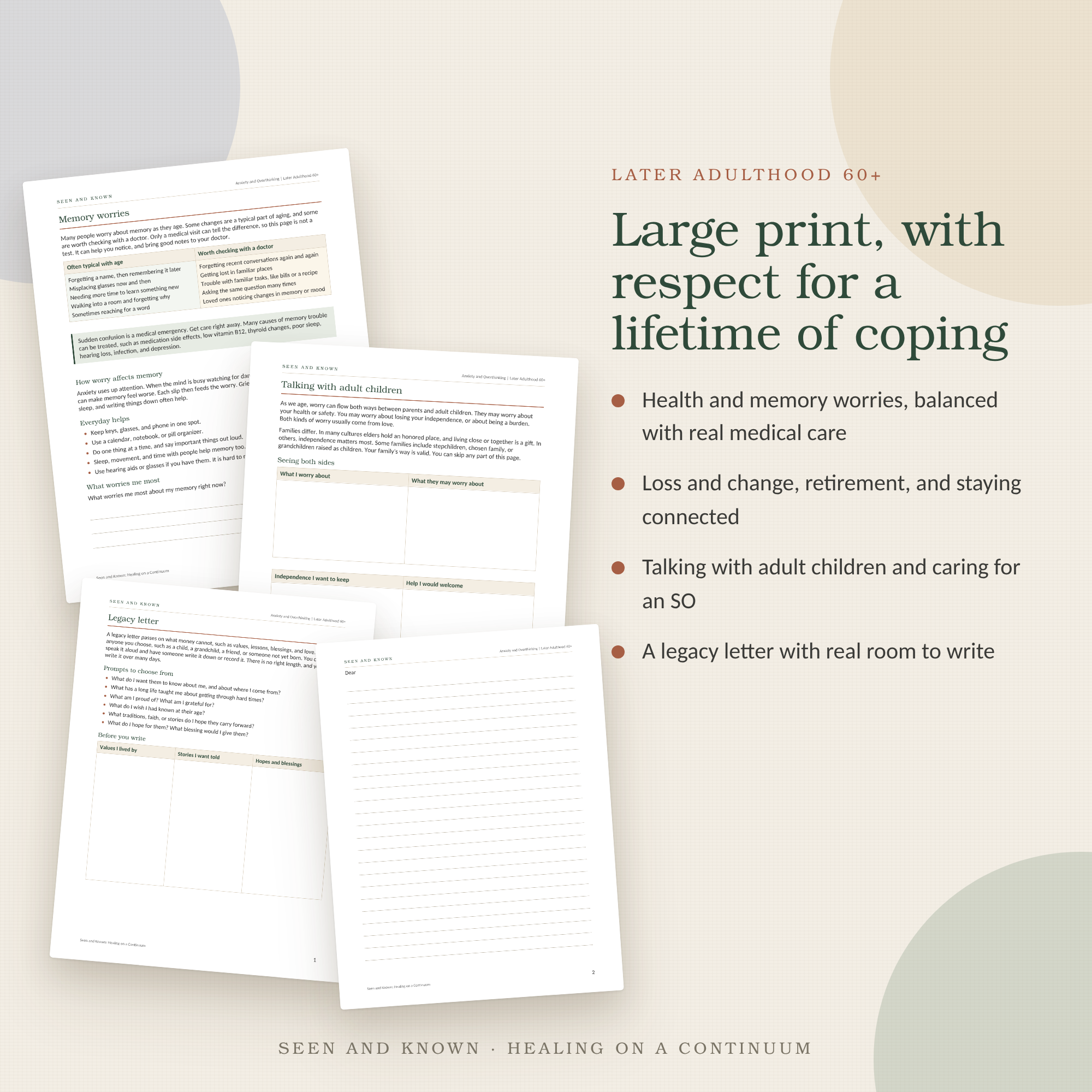 Image 7 of 9
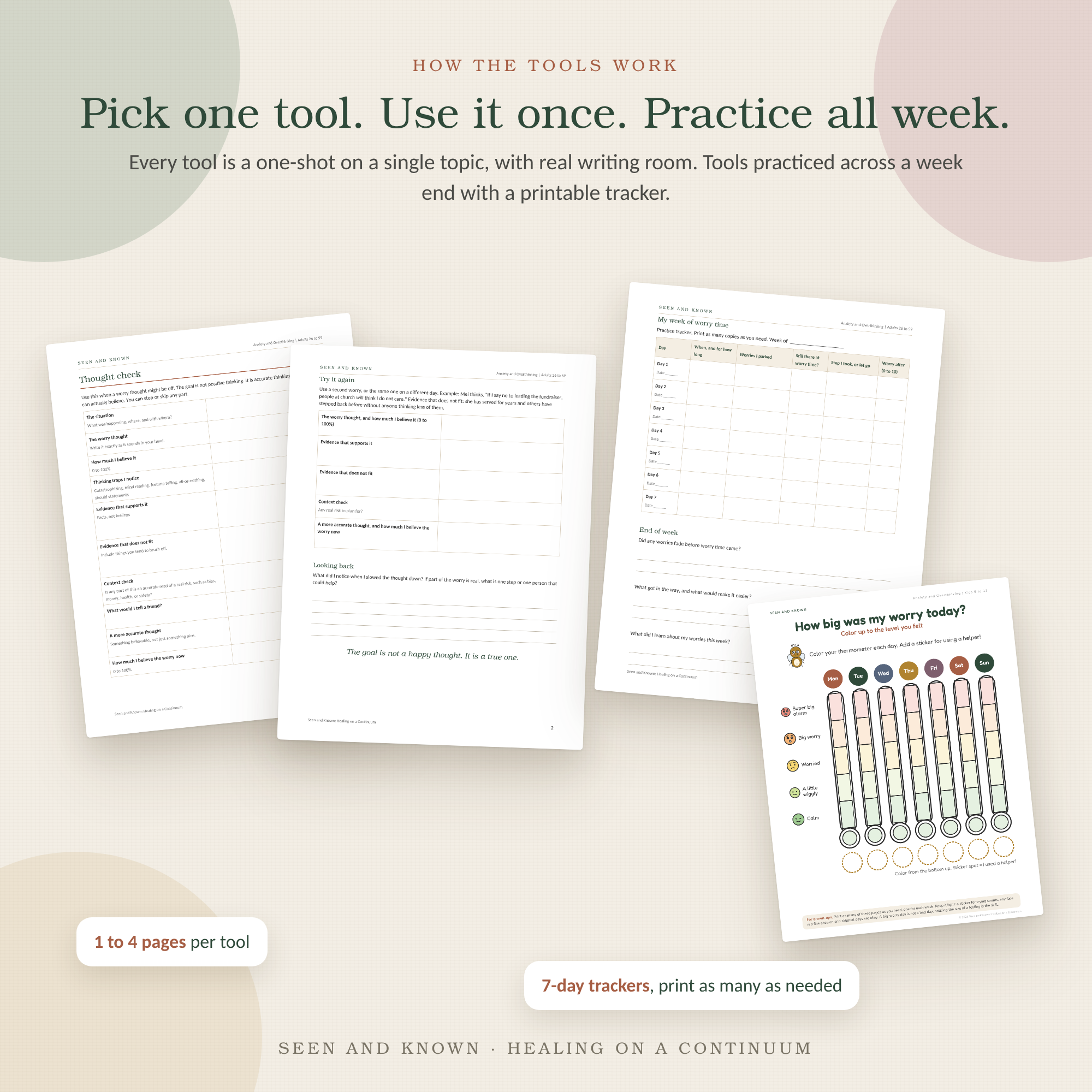 Image 8 of 9
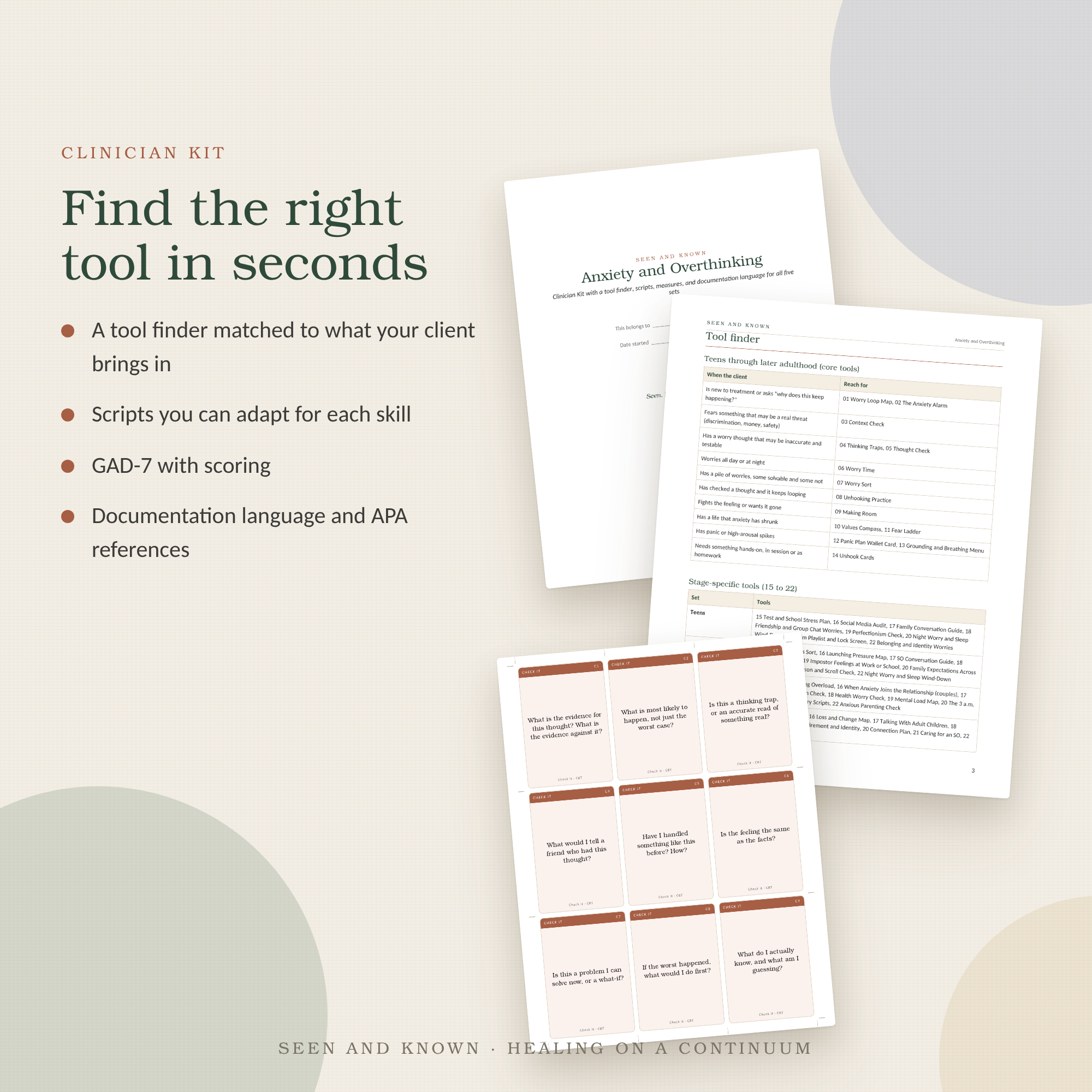 Image 9 of 9