One shared core. Two exam tracks. Built on how memory actually works.
Most exam prep teaches you to memorize. Memorizing gets you through a Tuesday. Understanding gets you through a career. This guide is built to do both. It was written by a clinician who passed the NCMHCE, not by a test company.
WHAT IS INSIDE
Part I: The Shared Core. All eight CACREP content areas, taught for understanding: ethics, culture and intersectionality, lifespan development, career, counseling theories and the common factors, groups, assessment, and research.
Part II: The Clinical and Professional Core. How the DSM-5-TR is built and every diagnostic class with worked differentials. Crisis, risk, and safety assessment. Psychopharmacology for counselors. Sexuality, intimate partner violence, and maltreatment. Treatment planning and documentation with sample documents. Telemental health, technology, and artificial intelligence. Settings, specialties, and populations.
Part III: The NCE Track. How to read and work an NCE item, plus a 200-item practice exam in four timed sets of 50, mixed across all six domains and scored by domain.
Part IV: The NCMHCE Track. A step-by-step method for reading a case and making decisions, plus ten full practice cases in the 2027 three-section format. Diagnoses, settings, ages, and cultural contexts rotate from case to case.
Part V: The Study System. A 12-week plan for a first attempt, a 6-week plan for a retake or second exam, a spaced review calendar, and an exam-week protocol.
Appendices. Theorist quick reference, psychopharmacology primer, ethics codes crosswalk, glossary of exam terms, and every memory hook in one place for your final review.
HOW EVERY CHAPTER WORKS
Every chapter follows the same structure, so you always know what comes next: The Map, Core Content, Clinician’s Corner, Memory Hooks, Practice, a 12-item Self-Check, and Answers. Every rationale points back to the section that answers it, so a missed question tells you exactly what to reread.
BUILT ON LEARNING SCIENCE
Retrieval practice, spacing, interleaving, connection, dual coding, and answering before you check. Each chapter also offers five ways into the material (See it, Say it, Move it, Build it, Teach it), so you can choose what you’ll actually do that day.
WHAT MAKES IT DIFFERENT
A Clinician’s Corner in every chapter, because knowing why something matters makes the exam question easier.
Trauma-informed, culturally responsive diagnostic sections. You learn the criteria and when to question them.
Rationales for the wrong answers too, so you stop carrying the misunderstanding each distractor was written to catch.
Covers both the current exam forms and the revised forms launching July 1, 2027.
FILE DETAILS
Instant digital download (PDF)
433 pages, US letter size, print-friendly
Licensed for one purchaser. Please do not share, resell, or post the file.
This guide is an independent study resource and is not affiliated with, endorsed by, or sponsored by NBCC, CCE, or the American Psychiatric Association. NCE, NCMHCE, and NCC are trademarks of NBCC. Confirm current exam requirements with NBCC and your state licensing board.
Created by Stacy Krones, M.S., Certified Trauma Professional. Seen and Known: Healing on a Continuum.

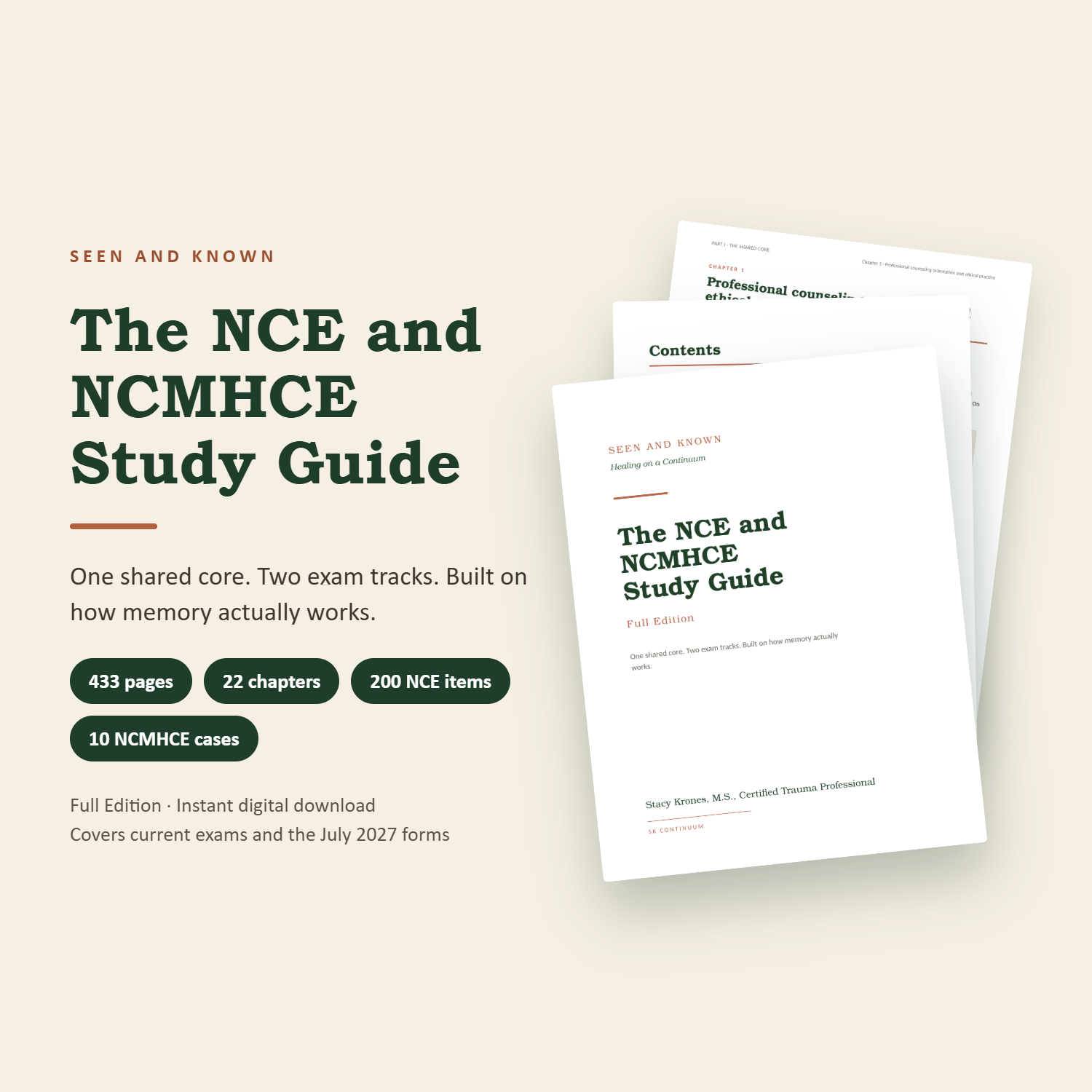 Image 1 of 8
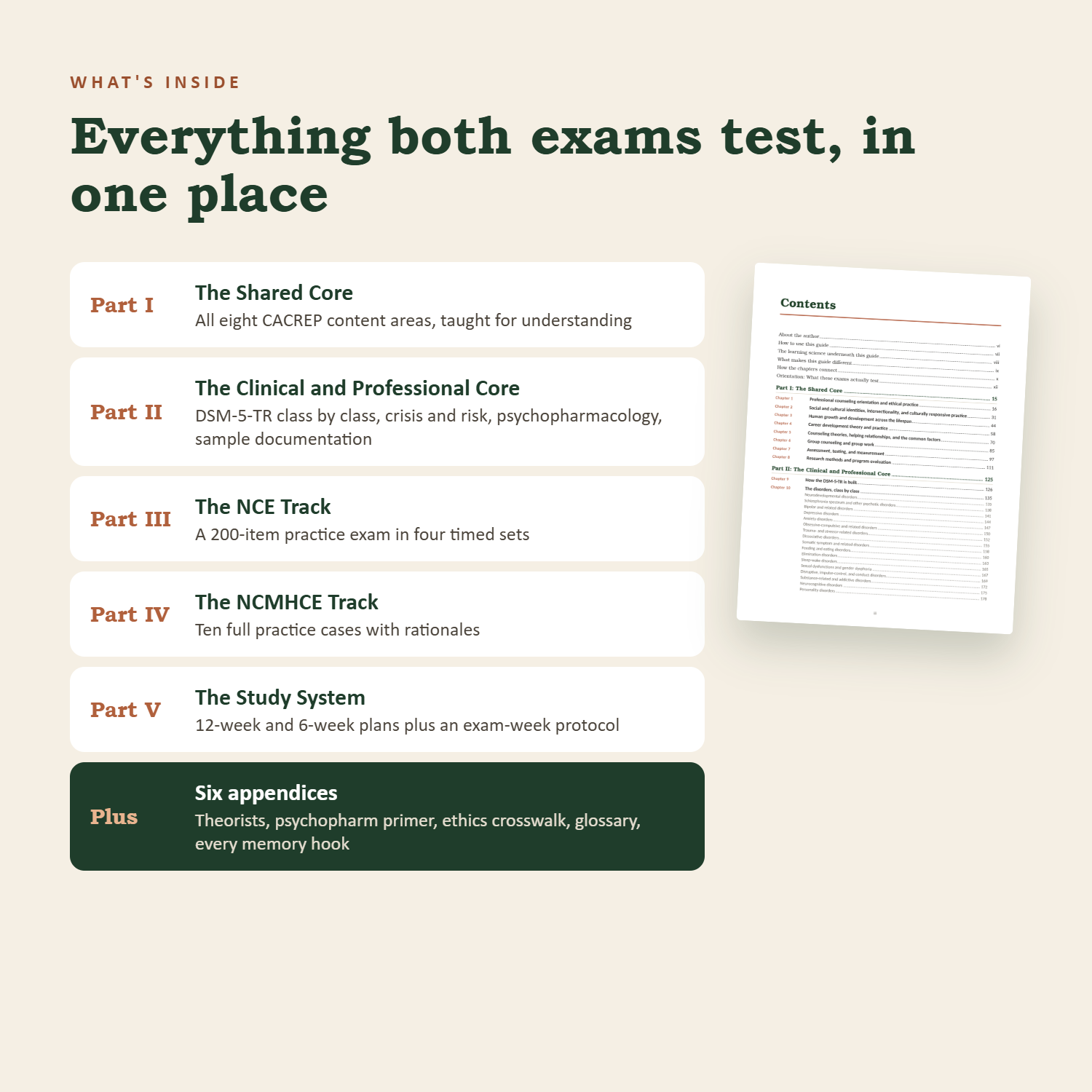 Image 2 of 8
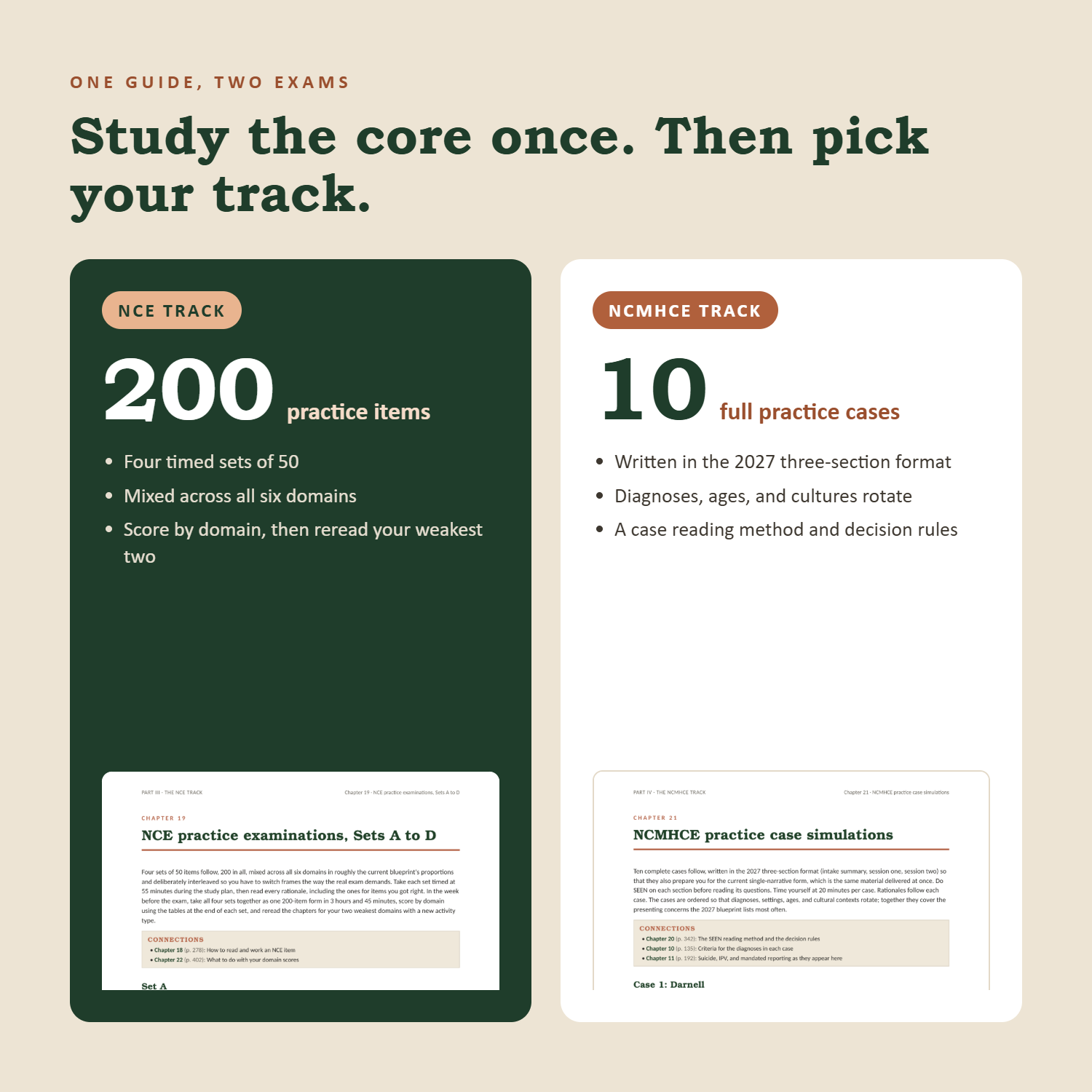 Image 3 of 8
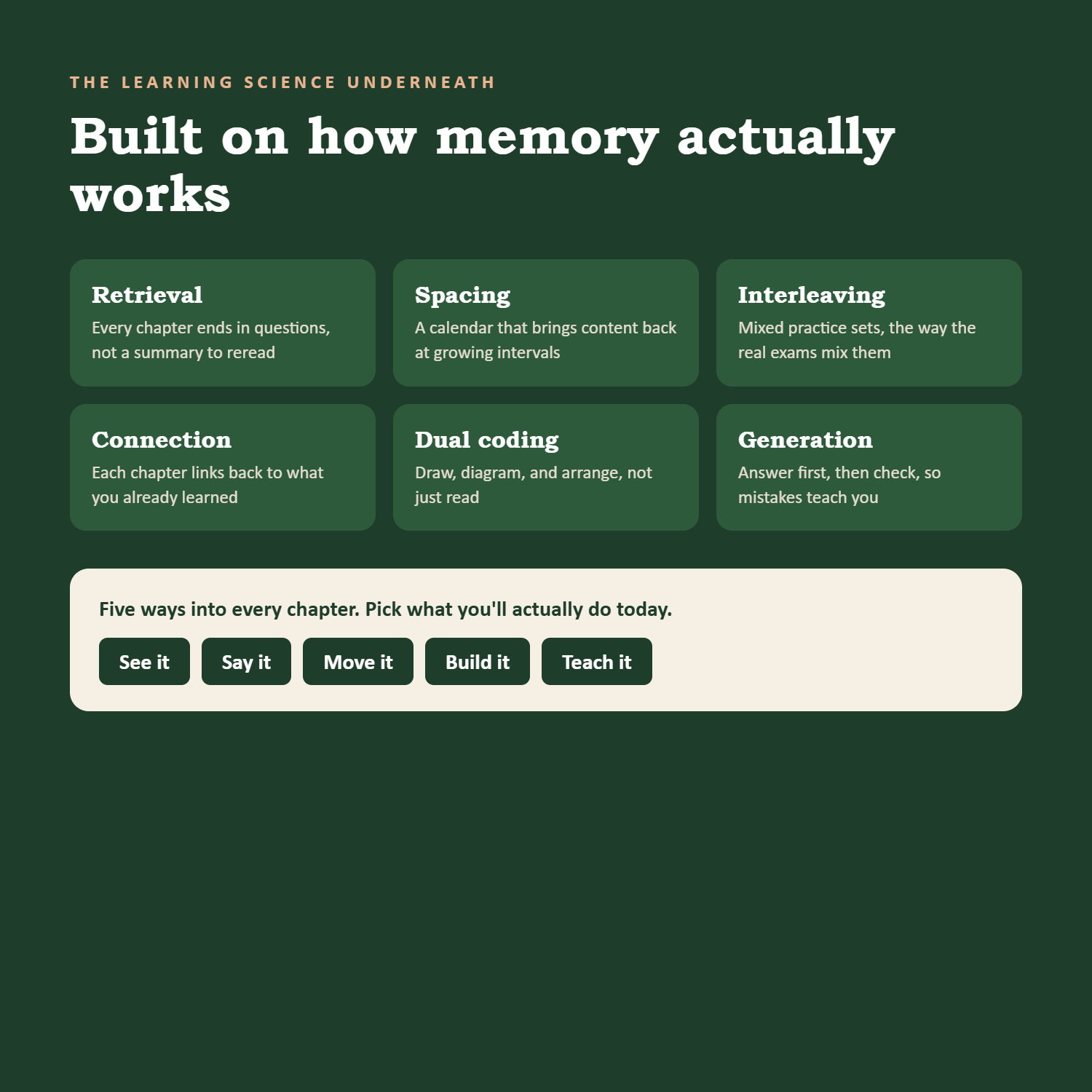 Image 4 of 8
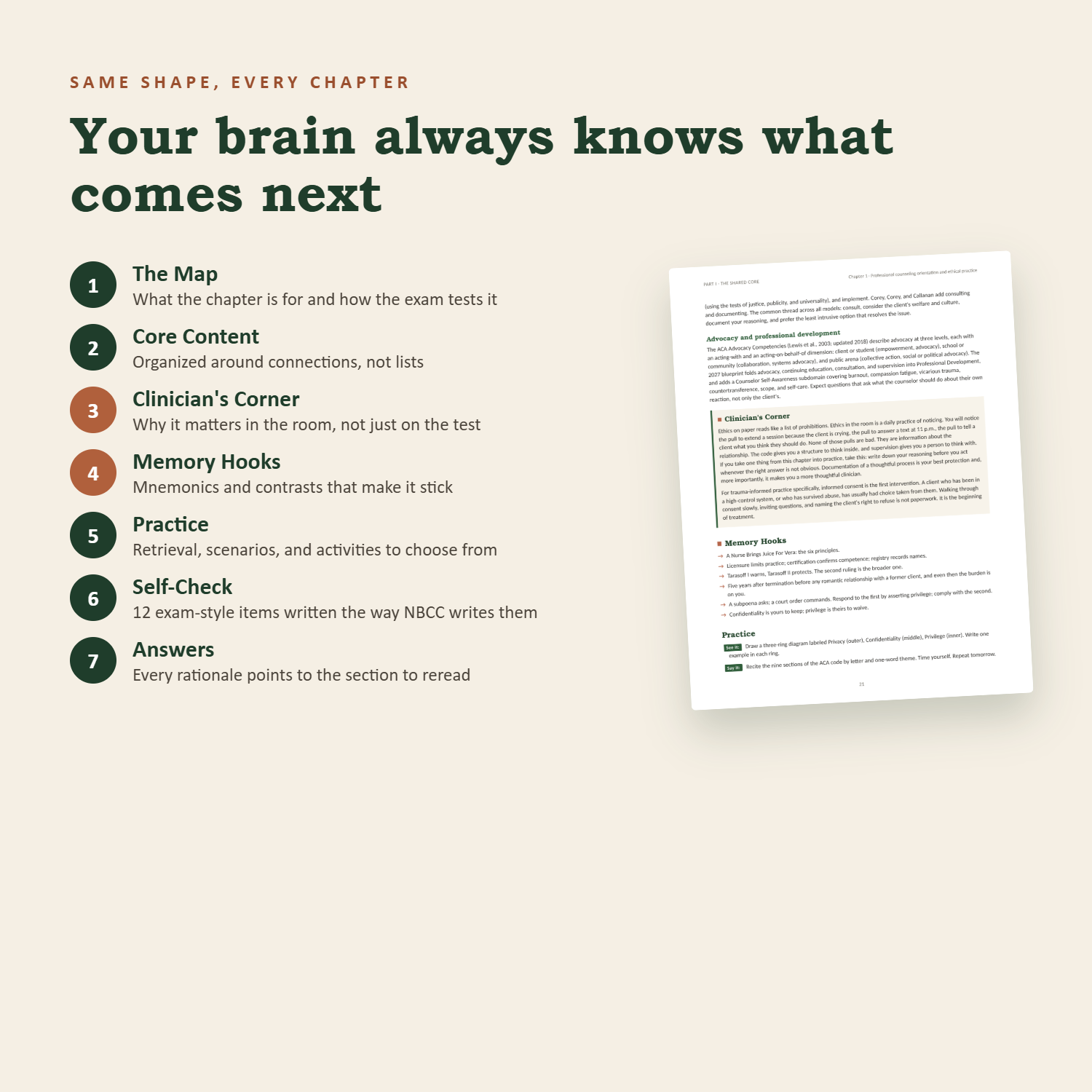 Image 5 of 8
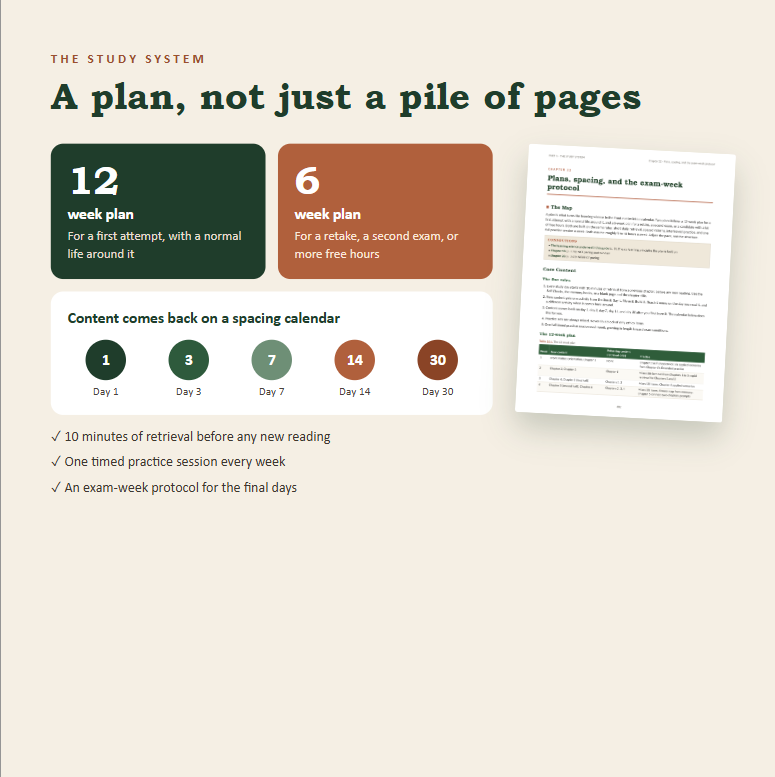 Image 6 of 8
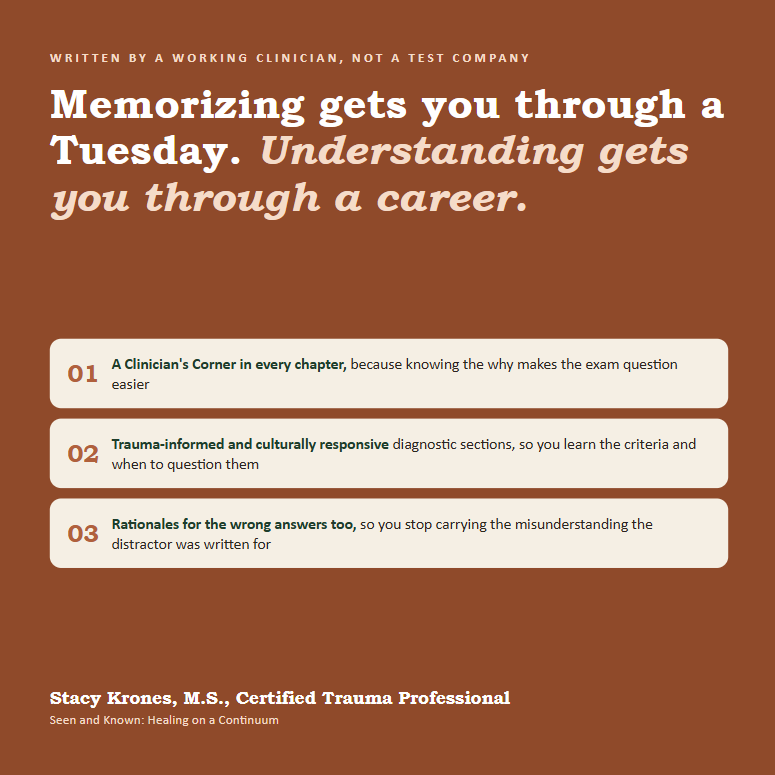 Image 7 of 8
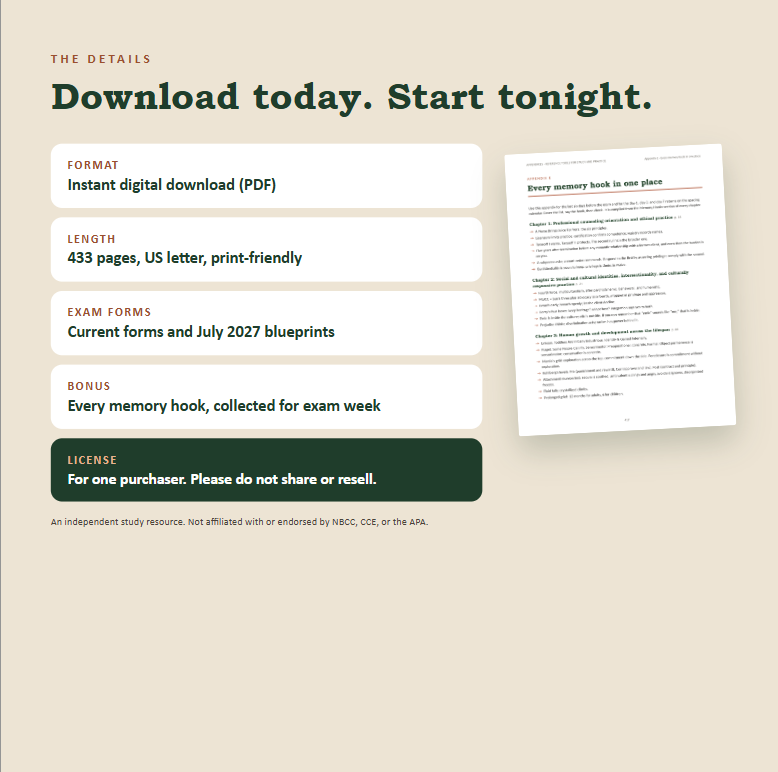 Image 8 of 8