What Matters Most: a values card sort for identifying core values and meaning
Values are what clients want their lives to be about. They are not goals to finish but directions to move toward on any day, including the hard ones. What Matters Most gives you a structured, hands-on way to help clients find theirs.
How the sort works:
- First sort. Clients place each card under Matters to me or Does not matter to me. There are no right or wrong answers, only what feels true.
- Narrow the pile. Clients keep removing cards until they have no more than 30, guided by questions like “Does this reflect who I am, or who I am expected to be?”
- Find connections. Clients group the remaining cards into five themes using the five group cards.
- Choose a primary value. For each group, clients choose the value that feels most central.
- Name your core values. The five primary values become the client’s core values, recorded on the included worksheet.
Values chosen with care:
The 82 values are written in plain, client-friendly language. They include values often missing from standard decks, such as Cultural Identity, Gender Identity, Sexual Identity, Spirituality, Safety, Boundaries, Repair, Dignity, Embodiment, Rest, and Vulnerability. That makes the sort a fit for identity work and trauma-informed care.
Ways to use it in your work:
- ACT values clarification and committed action
- Motivational interviewing, connecting change to what the client cares about
- Treatment planning, anchoring goals in the client’s own values
- Identity work, including noticing introjected values that belong to someone else
- Revisiting the sort later in treatment to see what has shifted
For the clinician:
The deck includes processing ideas: notice which values were hard to release, which belong to someone else, and which have been quiet lately. It also includes documentation notes.
What’s included:
- 82 values cards
- 7 sorting and group cards
- A cover card, a card-sort instruction card, and a clinician card
- A printable My core values worksheet
Part of the Seen and Known: Healing on a Continuum collection. Our clinical tools are trauma-informed, culturally responsive, and made by a clinician for clinicians.
For use by licensed or pre-licensed mental health professionals and supervised trainees within their scope of practice. Purchase includes a license for use in your own clinical practice.

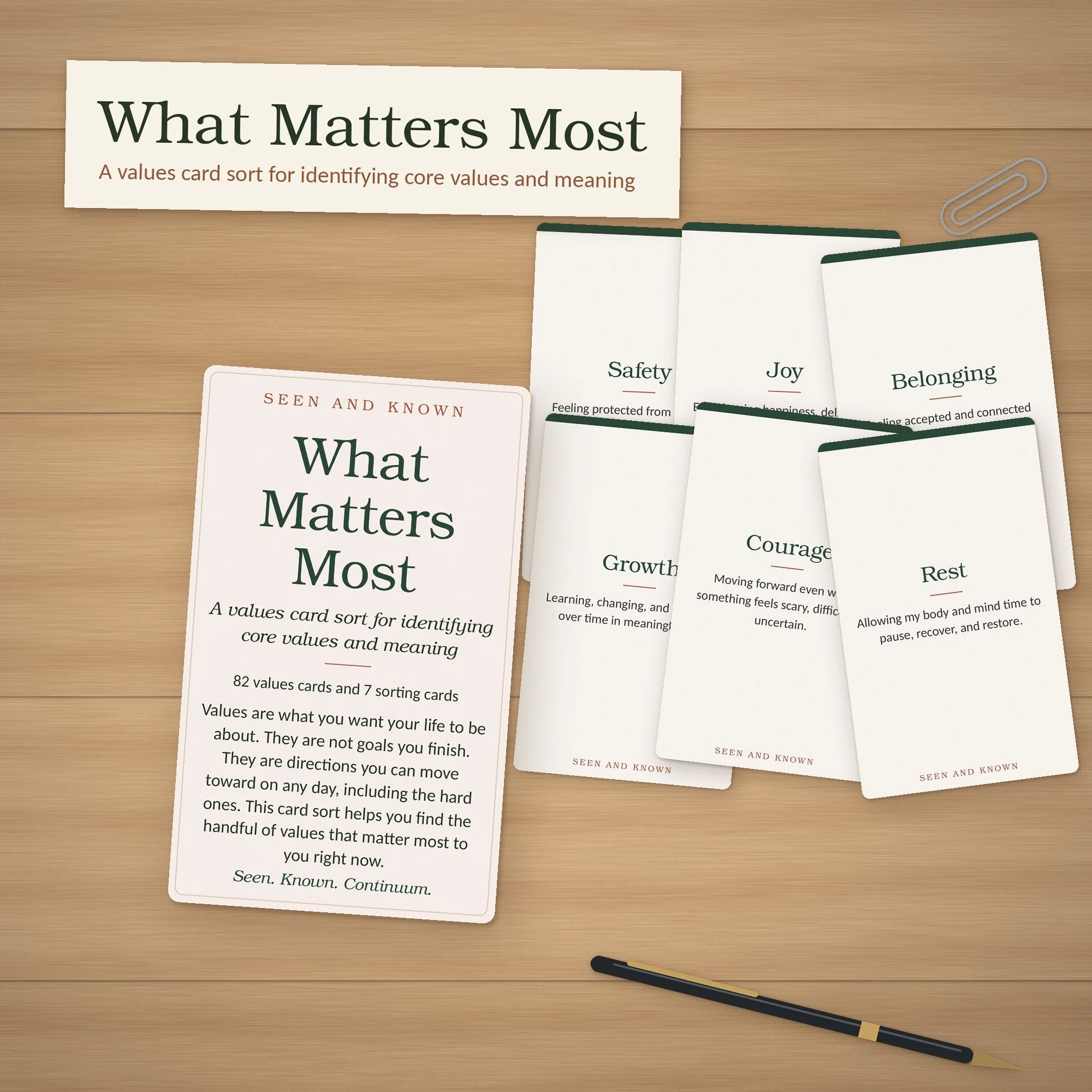 Image 1 of 6
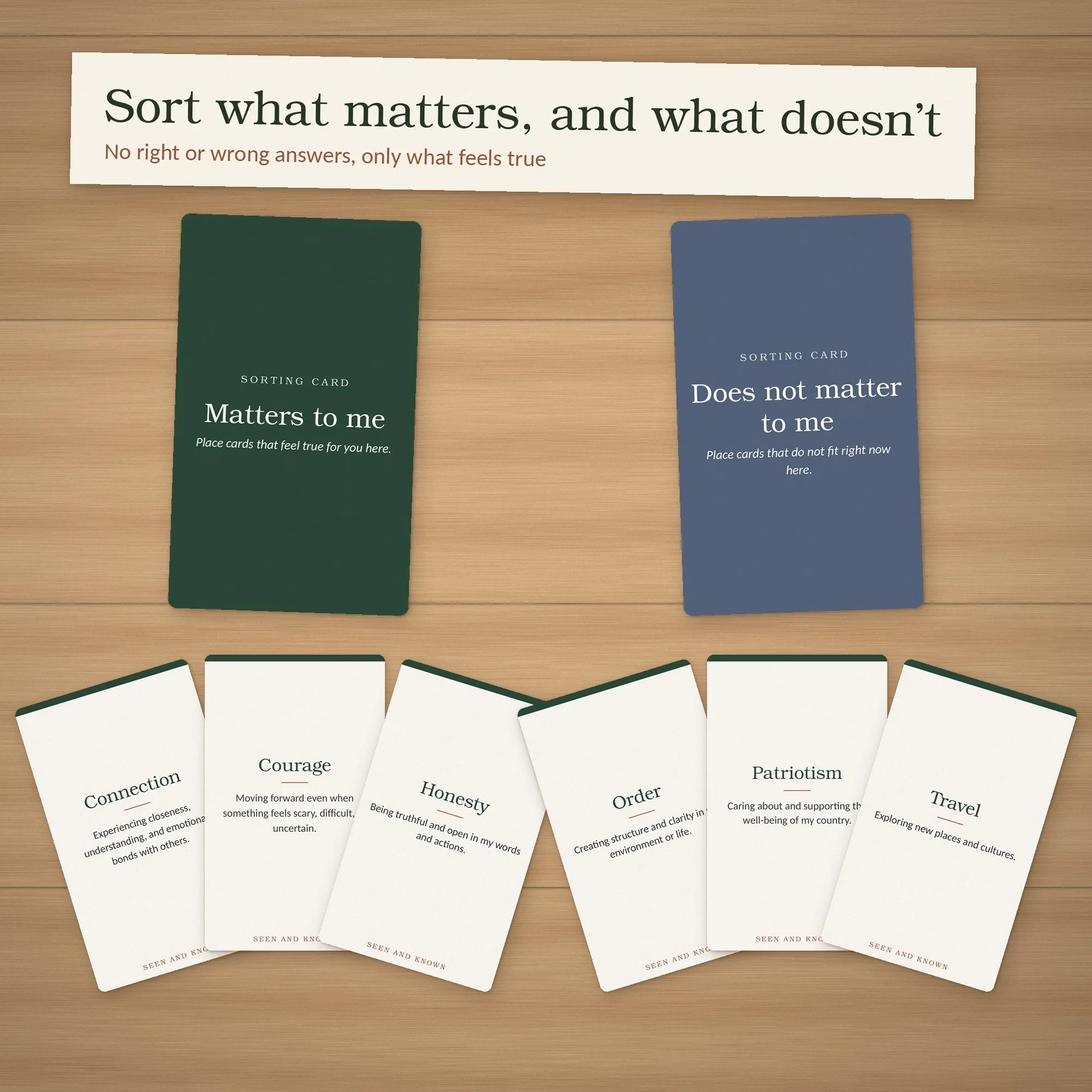 Image 2 of 6
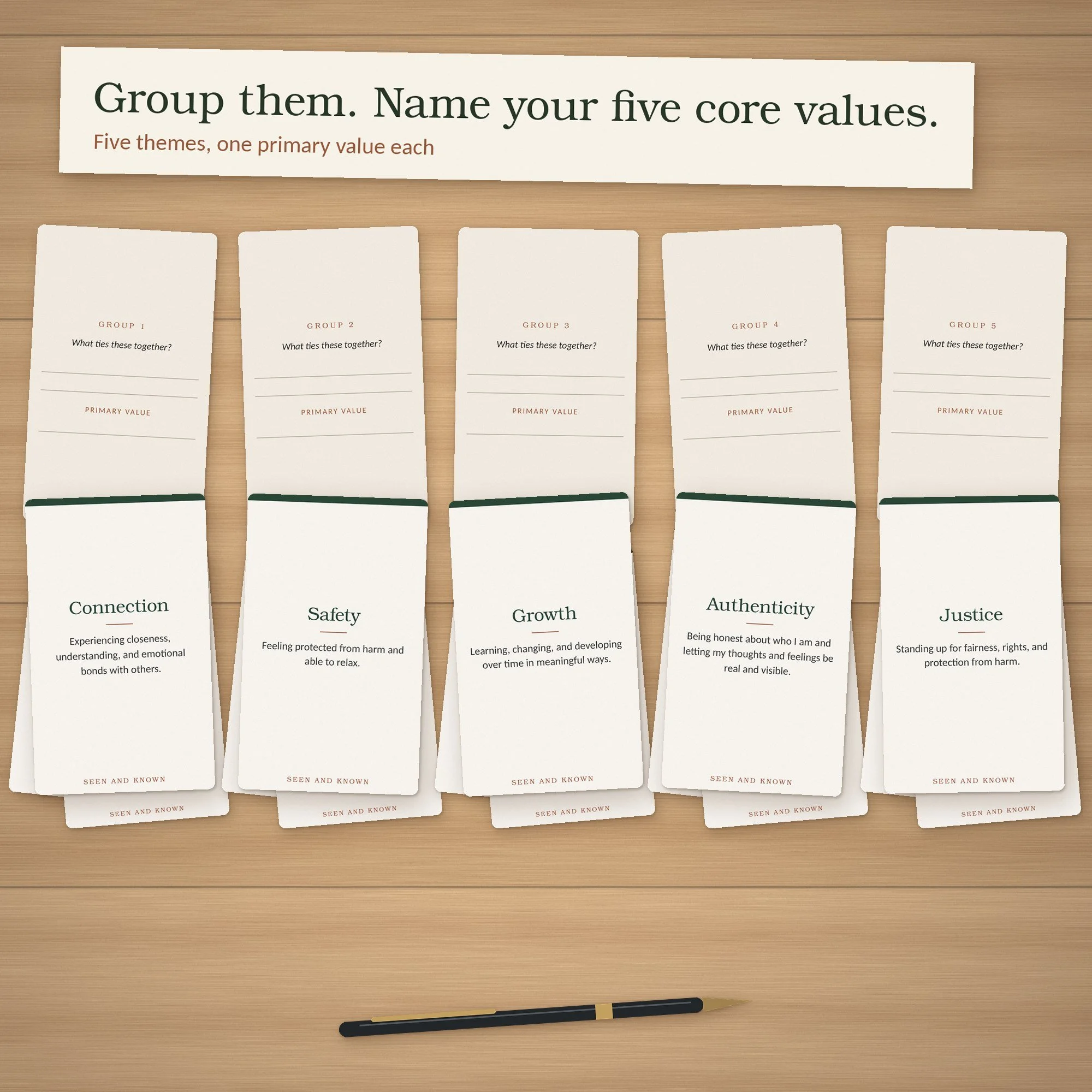 Image 3 of 6
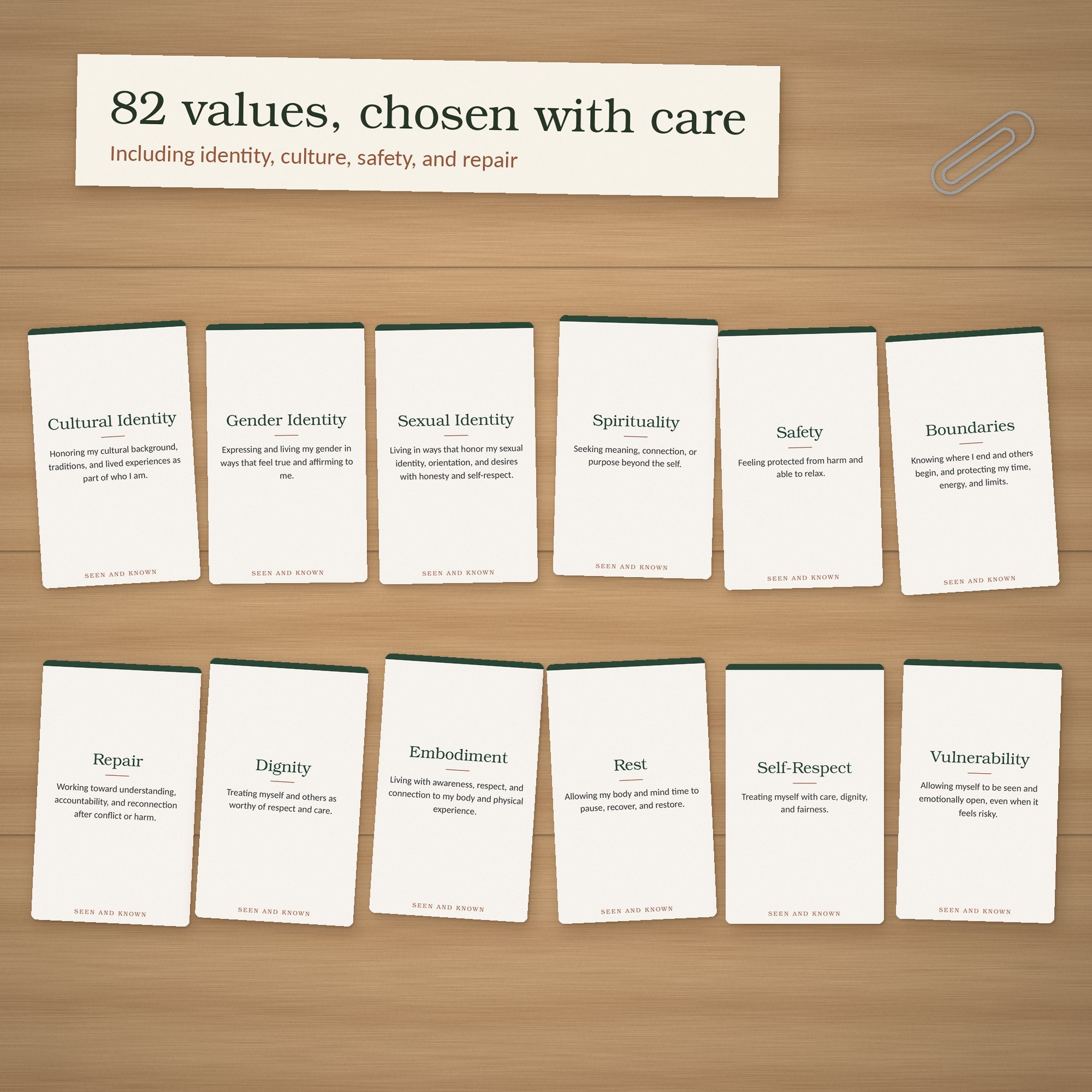 Image 4 of 6
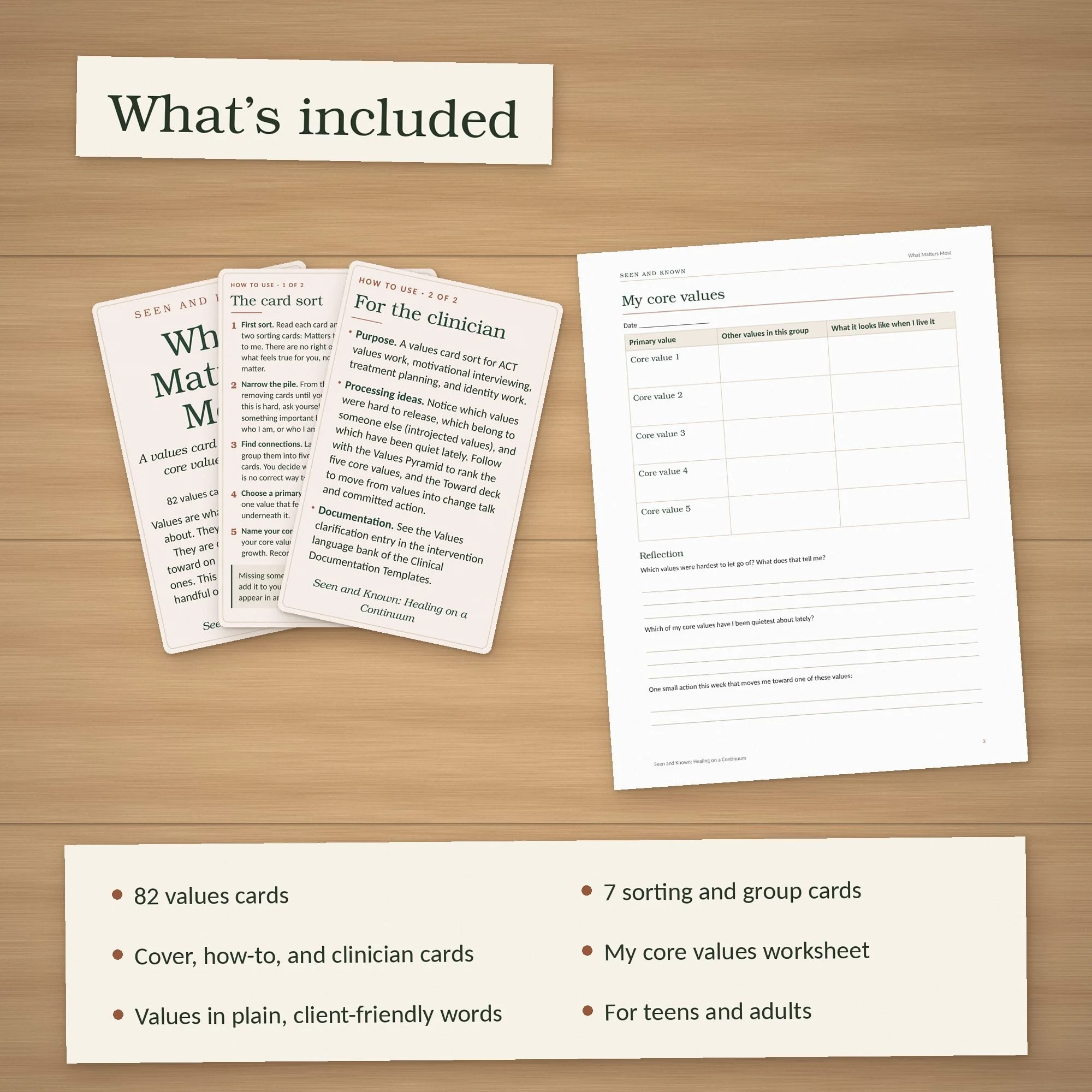 Image 5 of 6
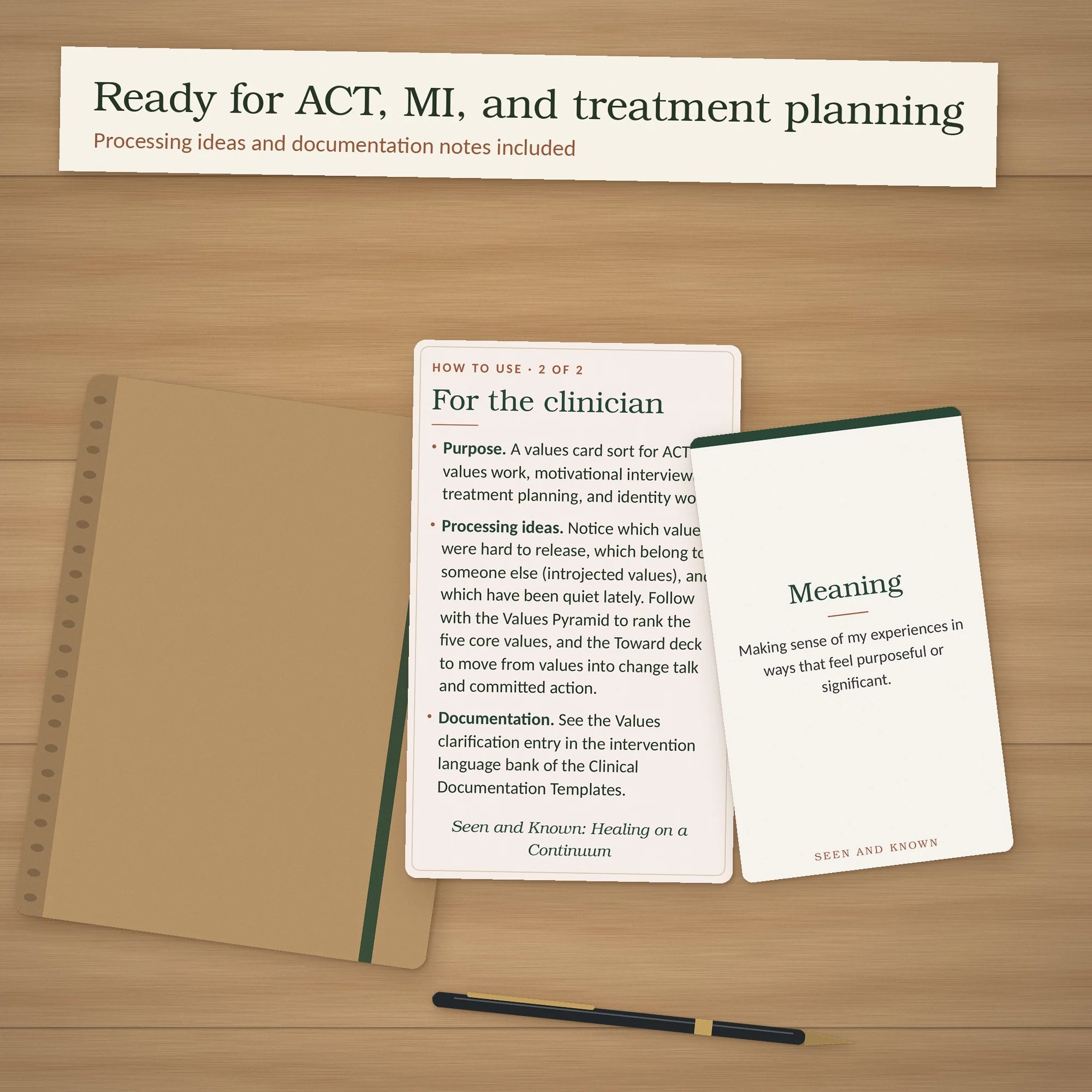 Image 6 of 6